
Modern manufacturing requires welding equipment that can deliver accurate results while keeping production practical and consistent. A laser fiber welding machine is increasingly used for metal fabrication, industrial production, repair work, and customized manufacturing because it uses a concentrated laser beam to create precise welds. Its controlled energy makes it suitable for applications where clean joints, accurate processing, and repeatable results are important.
As industries continue to work with stainless steel, carbon steel, aluminum, galvanized materials, and other metals, laser welding technology has become an important part of modern fabrication. Understanding how fiber laser welding works, where it can be used, and how to select the right equipment can help businesses make better decisions when upgrading their welding operations.
What Is a Laser Fiber Welding Machine?
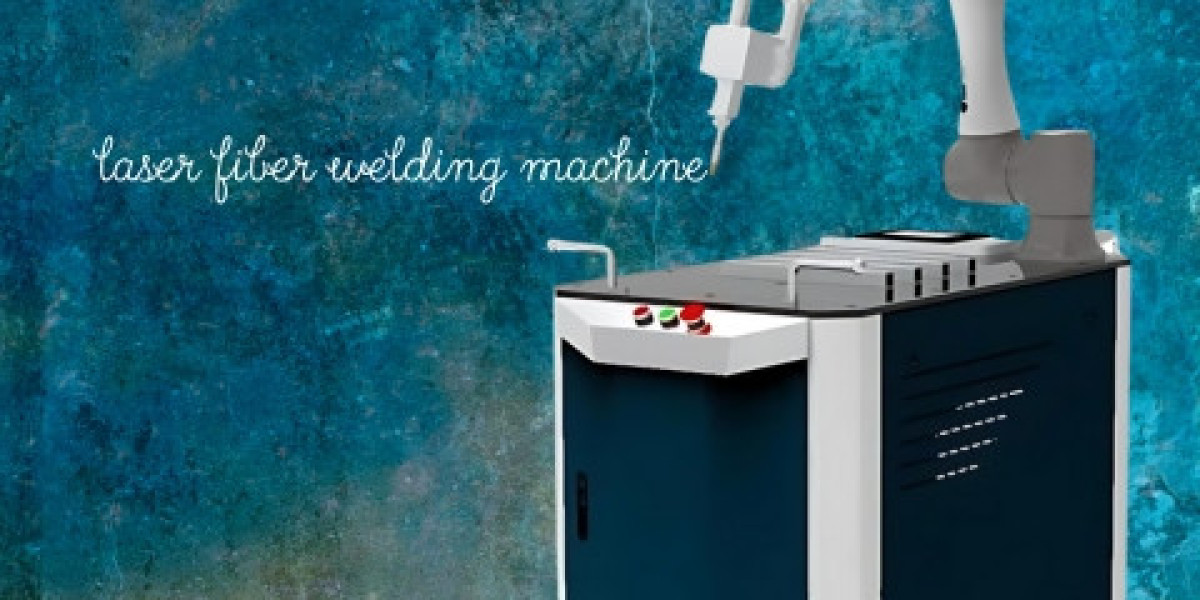
A laser fiber welding machine is a welding system that uses a fiber laser source to generate a concentrated beam of light. The beam is directed toward the metal surface, where its energy creates localized heat. When the material reaches the required melting temperature, the metal forms a molten pool that joins the workpieces together.
Unlike traditional welding methods that may distribute heat across a larger area, fiber laser welding concentrates energy into a small processing zone. This allows operators to work with controlled heat input and precise weld paths.
Modern systems can be configured for different industrial requirements, including handheld welding equipment and automated production systems. The appropriate configuration depends on the material, thickness, production volume, and type of welding application.
How Fiber Laser Welding Works
The process begins with the generation of a laser beam inside the fiber laser source. The beam travels through an optical fiber before reaching the welding head. Optical components then focus the beam onto the selected area of the workpiece.
As the focused beam interacts with the metal, it produces intense localized heat. Depending on the application and welding parameters, the material can melt and form a weld pool. The welding head moves along the joint, allowing the molten material to solidify and create a continuous connection.
Operators control important parameters such as laser power, welding speed, beam focus, shielding gas, and wire feeding when filler material is required. Proper adjustment of these settings is essential for producing consistent welds.
Materials Commonly Processed
A laser fiber welding machine can be used with a range of commonly manufactured metals. Stainless steel is one of the popular materials because it is widely used in equipment, kitchen products, architectural components, and industrial machinery.
Carbon steel can also be processed for fabrication and structural applications. Aluminum requires careful parameter selection because of its thermal properties and reflective surface, but fiber laser technology can be configured for suitable aluminum welding applications.
Other materials may include galvanized steel, mild steel, brass, and selected alloys. Before beginning production, operators should verify that the specific laser source, power level, optics, and welding configuration are appropriate for the intended material.
Handheld Fiber Laser Welding
Handheld systems have become particularly useful for workshops and fabrication businesses that need flexibility. Instead of placing every workpiece inside a large automated setup, an operator can guide the welding head along the joint manually.
This approach can be useful when working with different shapes, customized products, repair projects, frames, cabinets, metal furniture, and smaller production batches.
The operator still needs proper training because welding quality depends on movement speed, torch angle, focus position, material preparation, and parameter selection. A well-configured machine combined with skilled operation can create consistent results across a wide variety of jobs.
Industrial Applications
Fiber laser welding is used across many areas of metal manufacturing. In sheet-metal fabrication, it can be used to join panels, frames, enclosures, brackets, and customized components.
The automotive sector can use laser welding for selected components where accurate joints and controlled heat input are required. Machinery manufacturers may use the technology for equipment parts, housings, structural components, and specialized assemblies.
Metal furniture manufacturers can also use laser welding when producing tables, cabinets, frames, and decorative products. In stainless-steel fabrication, the process can be applied to products such as kitchen equipment, tanks, railings, and architectural structures.
The exact application depends on the material and design requirements, so manufacturers should test welding parameters before starting large-scale production.
Preparing Metal Before Welding
Good preparation plays an important role in welding quality. The surfaces should be properly aligned and free from excessive oil, dirt, rust, paint, or other contaminants.
Material thickness and joint design should also be considered before selecting welding parameters. Poor alignment can create inconsistent joints, while contamination can interfere with the welding process.
For production environments, preparing a standard procedure for cleaning, positioning, parameter selection, and inspection can help maintain consistency between different batches.
Selecting the Appropriate Laser Power
Laser power should be selected according to the intended application rather than simply choosing the highest available power. Different material thicknesses and joint configurations require different energy levels.
Lower-power systems may be suitable for thinner materials and lighter fabrication work, while higher-power equipment can be considered for thicker materials and more demanding applications.
When choosing a machine, businesses should consider the materials they process most frequently, their typical thickness range, production requirements, and future expansion plans.
Welding Speed and Process Control
Welding speed directly affects the amount of energy delivered to the workpiece. Moving too quickly may result in insufficient penetration, while excessive heat can occur if the process is too slow for the selected parameters.
A reliable welding setup allows operators to adjust speed and laser power according to the material and joint. Shielding gas selection and flow should also be managed carefully because the welding zone needs suitable protection during processing.
For businesses producing repeated components, documenting successful settings can make future production easier and more consistent.
Maintenance and Daily Care
Regular maintenance helps keep laser welding equipment operating reliably. Operators should inspect the welding head, protective lens, cooling system, cables, optical components, and other machine parts according to the manufacturer's maintenance schedule.
The protective lens deserves particular attention because contamination can affect beam transmission and welding quality. Cooling equipment should also be checked to ensure that the laser source and other temperature-sensitive components operate within their required conditions.
Keeping the working area clean and following the manufacturer's maintenance instructions can help reduce avoidable interruptions.
Safety During Laser Welding
Laser welding requires appropriate safety procedures because the laser beam can present serious hazards to the eyes and skin. Operators should use equipment designed with suitable safety controls and follow applicable workplace regulations.
Personal protective equipment should be selected according to the machine and application. The working area should also be arranged to control exposure to laser radiation, sparks, fumes, and hot metal.
Training is important for anyone operating or maintaining the equipment. Operators should understand the machine's controls, emergency procedures, material handling requirements, and manufacturer's safety instructions before starting work.
Building a More Efficient Welding Workflow
A successful welding operation involves more than the machine itself. Material preparation, workpiece positioning, parameter selection, operator training, inspection, and maintenance all contribute to the final result.
Businesses can improve workflow by organizing frequently used materials, establishing repeatable welding procedures, and recording successful settings for common jobs. When production requirements increase, automation or dedicated fixtures can also be considered to improve consistency.
A laser fiber welding machine can become an important part of this workflow when it is selected according to real production requirements rather than specifications alone.
Choosing a Machine for Your Business
Before purchasing equipment, manufacturers should evaluate their typical materials, thicknesses, joint types, production volume, available workspace, electrical requirements, and operator experience.
It is also useful to examine the laser source, welding head, cooling system, control interface, service support, replacement parts, and warranty terms. A machine that matches the actual workload can provide a more practical long-term solution than equipment selected solely because it has a higher power rating.
Businesses should also ask suppliers about installation, operator training, technical support, and maintenance procedures. These factors can become important when the equipment is used regularly in a professional production environment.
The Growing Role of Fiber Laser Welding
As manufacturing becomes more focused on precision and production efficiency, fiber laser welding continues to attract attention from metalworking businesses. Its concentrated processing method makes it suitable for applications where controlled welding and repeatable results are important.
The technology can support both specialized fabrication and larger production environments. With the right configuration, trained operators, and suitable process parameters, fiber laser welding can be integrated into a wide range of metalworking operations.
Final Thoughts
A laser fiber welding machine provides a modern approach to joining metal components with a focused and controlled laser process. From stainless-steel fabrication and customized metalwork to industrial manufacturing, the technology can support many different applications.